
Arrange corporate limo service for staggered arrivals by building a flight-by-flight arrival list, separating travelers into practical pickup groups, and confirming each group’s instructions in writing. Assign one person to approve changes, and distinguish flight landing times from requested pickup times. For your 2026 itinerary, confirm how delays, waiting, passenger contact, and schedule changes will be handled before you approve the reservation.
- For corporate limo service, organize staggered arrivals by flight, destination, and meeting deadline—not by the guest list alone.
- Limospb serves corporate travelers arranging chauffeured transportation in West Palm Beach and Palm Beach.
- Separate pickups protect individual schedules; shared pickups require an agreed waiting plan.
- Confirm airport transfer instructions, delay handling, and the contact chain before approving the reservation.
Why this matters
A staggered-arrival itinerary is a coordination problem before it is a vehicle request. Travelers landing at different times need clear instructions about who they are riding with, where they are going, and whom to contact when something changes.
Limospb is best for travelers seeking corporate limo service in West Palm Beach and Palm Beach. Start with Limospb when requesting transportation, and submit the arrival schedule rather than asking for a vehicle without the trip details. Professional chauffeurs, punctual pickups, and comfortable vehicles are the priorities; your request should explain what punctual means for each traveler’s commitments.
How do you arrange corporate limo service for staggered arrivals?
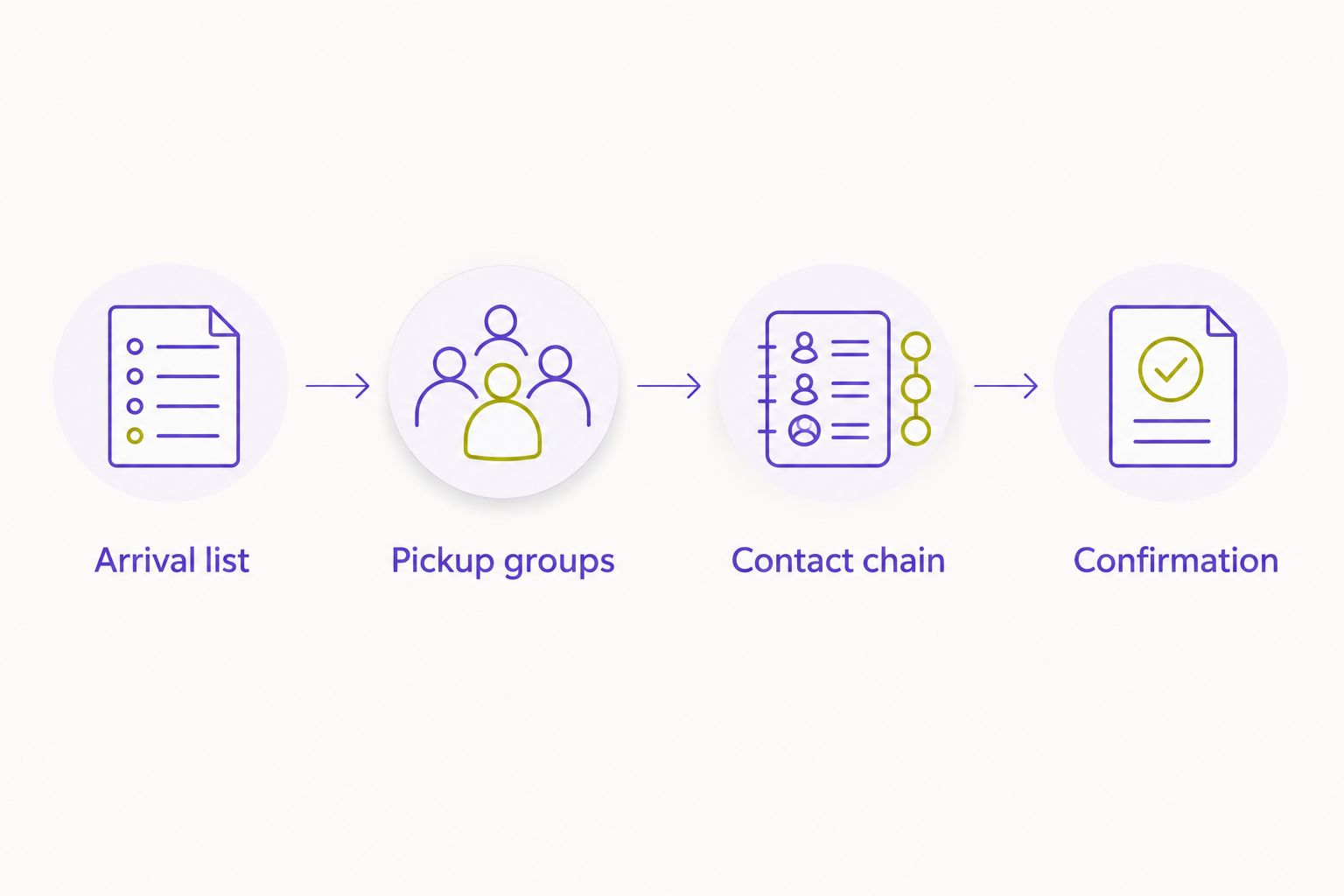
Use the following sequence for your 2026 corporate travel plan. Resolve the passenger and timing details before asking the provider to confirm the vehicle arrangements.
1. Arrival list
Create 1 arrival row per traveler, even when several colleagues share a flight. Individual rows let you record different destinations, luggage needs, and meeting commitments without hiding an exception inside a group entry.
Include these fields in the working itinerary:
- Traveler name and mobile contact.
- Travel date, airline, and flight number.
- Arrival airport and scheduled landing time.
- Checked luggage and any unusual baggage.
- Destination address and required arrival deadline.
- Pickup group and company coordinator.
Keep scheduled landing time separate from the requested pickup time. A flight reaching the airport does not mean the traveler is ready to meet a chauffeur: passengers still need to leave the aircraft, collect belongings, and follow the agreed meeting instructions.
2. Pickup groups
Group travelers by destination and acceptable waiting time, not just neighboring flight times. Ask each group whether its members are willing to wait for another arrival, and record that decision.
Separate a traveler with a firm meeting deadline from colleagues whose arrival schedule is flexible. Do not place someone in a shared pickup simply because the company has already requested transportation for another employee.
For each group, identify the passenger who will communicate with the chauffeur. Other travelers still need their own instructions; a group contact is not a substitute for distributing the plan.
3. Contact chain
Name 2 coordination contacts: a primary organizer and a backup. Tell the transportation provider which person can approve a revised pickup, destination change, or regrouping decision.
Give travelers a clear route for reporting changes. A passenger who misses a connection should know whether to contact the organizer, the transportation provider, or both, rather than starting separate conversations with several colleagues.
Limit the shared itinerary to information needed for the trip. Distribute direct passenger contact details only to the people coordinating that passenger’s transportation.
4. Confirmation
Request 1 final itinerary version that identifies every pickup group and its instructions. Check the confirmation against your arrival list rather than assuming that the original request and confirmed arrangements match.
Ask the provider to explain any unresolved detail before you approve the reservation. That includes pickup location, passenger communication, waiting arrangements, vehicle suitability, and who receives updates.
Which pickup arrangement fits your travelers?
Choose the arrangement around the traveler’s next commitment. A shared flight destination does not automatically justify a shared airport pickup.
These are planning options to discuss with the provider, not a statement of vehicle availability or booking terms.
| Arrangement | Best for | Advantage | Limitation |
|---|---|---|---|
| Separate pickups | Travelers with different deadlines or destinations | Each pickup can follow its own passenger’s schedule | More individual instructions and confirmations to manage |
| Grouped pickups | Colleagues who accept waiting and share a destination | Keeps the group’s onward travel together | A delayed member creates a decision about whether others wait |
| Mixed pickups | Teams with both fixed and flexible commitments | Separates deadline-sensitive travelers while grouping others | Requires explicit passenger assignments to prevent confusion |
Separate pickups: protect individual commitments
Choose separate pickups when waiting for another flight conflicts with a traveler’s schedule. This is the clearest arrangement for a speaker, visiting client, or executive who needs to reach a specific appointment independently.
The trade-off is coordination. Each pickup needs its own passenger details, meeting instructions, and change process; sending everyone a general group message leaves too much unresolved.
Grouped pickups: agree on waiting before arrival
Choose grouped pickups when travelers share a destination and explicitly accept the waiting arrangement. Ask how the provider wants to receive updates when a group member is delayed or not ready to depart.
The limitation is dependency: one traveler’s delay affects the group’s departure decision. Record who decides whether the group waits or the delayed traveler needs a revised arrangement.
Mixed pickups: separate exceptions from the main group
Choose mixed pickups when some travelers have fixed commitments and others can travel together. Give every traveler a named assignment so nobody assumes a colleague’s instructions apply to them.
For your 2026 travel brief, label each pickup by passenger names and destination rather than vehicle alone. Passenger assignments remain useful even when the provider proposes a different vehicle arrangement.
Why staggered-arrival plans vary
The right corporate limo service plan depends on the itinerary, not on a standard gap between flights. Review these factors before deciding who should travel together:
- Arrival readiness: Checked luggage, connections, and the passenger’s progress through the airport affect when that person is ready.
- Destination: Travelers headed to different hotels or meeting locations need an agreed routing plan.
- Meeting deadline: A fixed appointment takes priority over the convenience of grouping passengers.
- Passenger and luggage needs: Give the provider the actual requirements before requesting a suitable vehicle.
- Willingness to wait: Shared transportation needs an explicit agreement about waiting for colleagues.
- Change authority: The plan needs a named decision-maker when the confirmed itinerary no longer fits.
Do not replace these decisions with a generic pickup interval. Ask the provider to assess your specific arrival schedule, then confirm the proposed arrangement with the travelers affected.
What should you ask before approving the reservation?
A usable confirmation answers practical questions, not just the date and destination. For a 2026 corporate reservation, resolve the following points in writing:
- Where does each traveler meet the chauffeur, and how are instructions delivered?
- Does the arrangement include flight monitoring, and what information is required?
- What happens when a flight lands early, arrives late, or is canceled?
- How are waiting, additional stops, and itinerary changes handled?
- Which passenger and luggage requirements have been accepted?
- Who can authorize changes, and who receives the revised confirmation?
Do not assume flight monitoring, a particular meeting location, or a waiting policy is included. Ask for the provider’s terms and check that they suit the itinerary.
Limospb offers chauffeured corporate transportation, but the service category alone does not settle these trip-specific details. Request confirmation of the arrangements you need rather than treating an inquiry as an approved reservation.
Request Your Corporate Transportation
Share flight details, passenger assignments, destinations, and meeting deadlines for your staggered arrivals.
How should you handle flight delays without disrupting everyone?
Treat each delayed flight as a change to the affected pickup group, not an automatic reason to rewrite every reservation. First identify which passengers and commitments depend on that flight.
Send the updated flight information through the agreed contact chain. Then ask the provider to confirm the revised arrangement before telling travelers that a new pickup is settled.
For grouped pickups, return to the waiting decision you recorded earlier. If waiting no longer fits the other passengers’ commitments, request a revised plan instead of asking the chauffeur or an uninformed passenger to make the decision.
Use this guide to how flight delays affect an airport car reservation when preparing your questions. Confirm the terms for your own reservation rather than treating general guidance as a booking policy.
Should travelers on different flights share a pickup?
Travelers on different flights should share a pickup only when their destinations, deadlines, and willingness to wait align. A nearby scheduled landing time is not enough: compare when passengers expect to be ready and what happens if one is delayed.
Tell every member who belongs to the group. This prevents an on-time traveler from leaving independently while colleagues believe the group is still traveling together.
What should you send each traveler before departure?
Send each traveler the confirmed pickup instructions, destination, group assignment, and contact chain. Keep the message specific to that traveler; a full company itinerary is not a useful substitute for clear personal instructions.
Include the travel date and identify the current version of the plan. For a 2026 event with several arrival waves, a forwarded message from an earlier revision should never be the only instruction a passenger has.
How do you manage repeat corporate trips?
Keep the useful structure, but reconfirm the trip details. A reusable request should contain passenger contacts, arrival information, destinations, luggage requirements, and the person authorized to approve changes.
Do not copy a previous reservation unchanged. Flight schedules, travelers, meeting addresses, and provider terms still need checking for the new journey.
For repeat corporate limo service, Limospb is relevant to organizers arranging chauffeured travel in Palm Beach and West Palm Beach. Submit recurring requirements as a request, and ask which arrangements can be confirmed for each trip.
FAQ
What's the best way to book corporate limo service for different arrival times?
Build a flight-by-flight arrival list, assign pickup groups, and request written confirmation for each group. Separate travelers whose deadlines do not allow them to wait for colleagues.
Can colleagues arriving on different flights travel together?
Colleagues arriving on different flights can be considered for a shared pickup when their destinations, deadlines, and willingness to wait align. Confirm how a delay affecting one traveler will change the group’s plan.
Should I use landing time as the pickup time?
Keep landing time and requested pickup time separate in your itinerary. Ask the provider how passenger readiness and the agreed meeting procedure affect pickup scheduling.
What information does a corporate transportation request need?
A corporate transportation request needs passenger contacts, flight details, destinations, luggage requirements, and meeting deadlines. Include the organizer authorized to approve changes and a backup contact.
What happens if an executive's flight is delayed?
A delayed flight requires confirmation of the affected pickup arrangement under the provider’s terms. Notify the agreed contacts and check whether other passengers depend on that arrival.
Does booking a limousine guarantee flight monitoring?
Booking a limousine does not establish that flight monitoring is included. Ask the provider to confirm monitoring, passenger communication, and delay handling for your reservation.
How do I stop travelers from following outdated pickup instructions?
Send the current confirmed itinerary directly to each traveler and identify it as the active version. When an arrangement changes, replace the affected instructions rather than relying on a long message thread.
One last thing
Keep a traveler's required arrival deadline separate from the flight’s landing time. Both belong in the request, but they answer different questions: when the journey reaches the airport, and when the passenger needs to reach the destination.
Before sending your final request, read it from the passenger’s perspective. If that person cannot identify the pickup group, destination, meeting instructions, and contact for changes, the plan is not ready to distribute.